
The Rising Need for Smarter Solar Battery Care
As solar adoption surges across Australia, South Asia, and the Middle East, one trend stands out, homeowners and businesses are investing heavily in solar battery storage systems to achieve energy independence and protect against rising electricity costs.
Yet, many overlook a crucial factor that determines the real return on investment: maintenance. A solar battery is not just a passive storage device, it is an intelligent, electrochemical system that needs regular inspection, balancing, and cleaning. Without proper care, performance can degrade by up to 20–30% in as little as three years.
That is why brands like JSBESS emphasize not only supplying reliable solar batteries but also educating users on proper maintenance schedules and monitoring best practices to help maximize efficiency and battery lifespan.
This Solar Battery Care, Management, Warranties & Incentives Guide provides a complete overview of how to properly maintain solar batteries, understand Battery Management System (BMS) functions, interpret warranty terms, and take advantage of regional rebates and incentive programs.
Designed for homeowners and businesses in Australia, South Asia, and the Middle East, this JSBESS guide helps readers make informed decisions on whether to lease or buy solar batteries, ensuring maximum performance, savings, and long-term energy independence.
Note: The brands listed are not ranked in any particular order.
Disclaimer: The company names, founding dates, and addresses are sourced from publicly available information online.
Please note: The list in this guide is not exhaustive. There may be other reputable solar battery brands worth considering.
- The Rising Need for Smarter Solar Battery Care
- Solar Battery Maintenance Schedules & Checklists
- Battery Management Systems (BMS): Features & Importance
- How Do Solar Battery Warranties Work: What Is and Isn’t Covered?
- How Do Solar Battery Rebates and Incentive Programs Vary by State/Country?
- Solar Battery Leasing vs Buying: Pros & Cons
- Making Smart Decisions for Long-Term Energy Independence
Solar Battery Maintenance Schedules & Checklists
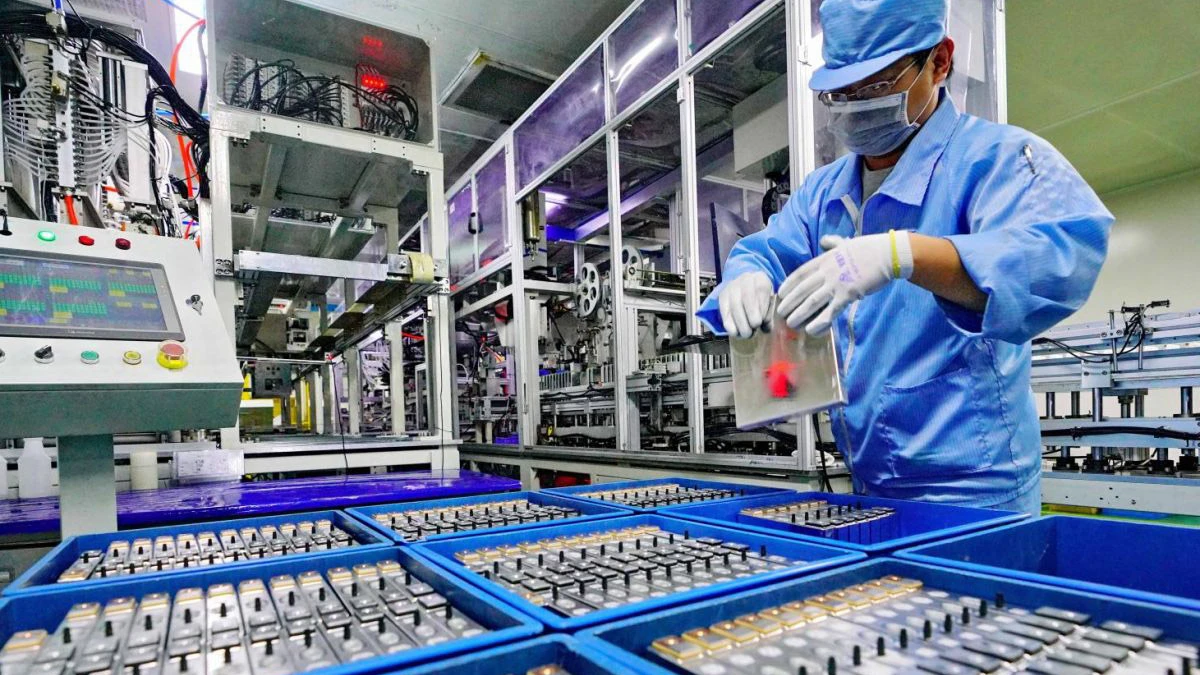
Regular maintenance is the cornerstone of long-lasting solar energy systems. Whether you’re using a lithium-ion, lead-acid, or LFP battery, routine checks ensure that your storage unit operates safely and efficiently, especially in regions with high ambient temperatures such as Dubai, Mumbai, or Perth.
Why Regular Maintenance Extends Battery Lifespan?
Solar batteries operate through repeated charging and discharging cycles. Over time, this process stresses the cells, causing gradual capacity loss. Regular maintenance mitigates this by detecting and resolving early signs of imbalance or overheating, preventing corrosion, oxidation, or dust accumulation on terminals and keeping software and firmware updated for accurate performance tracking.
A well-maintained lithium battery can last up to 15 years or 6,000+ cycles, compared to only 8–10 years for a neglected unit.
Step-by-Step Solar Battery Maintenance Checklist
Here is a breakdown of what JSBESS recommends for different intervals:
Monthly Maintenance Tasks
- Visual Inspection: Check for cracks, leaks, or swelling in the battery casing.
- Terminal Cleaning: Wipe dust or corrosion using a dry cloth and non-conductive brush.
- System Check: Monitor inverter display for errors or warning codes.
Quarterly Maintenance Tasks
- Voltage & Current Test: Use a multimeter to confirm each cell is balanced.
- Firmware Update: Check for available updates via BMS software or JSBESS app.
- Connection Check: Ensure all cables are tight and corrosion-free.
Annual Maintenance Tasks
- Professional Servicing: Hire a certified technician to perform a capacity test and insulation resistance test.
- Thermal Check: Inspect for hotspots using an infrared thermometer.
- Battery Recalibration: Reset BMS calibration to optimize state-of-charge accuracy.
Expert Insight: Maintenance Best Practices in Harsh Climates
- Australia: Focus on temperature management. Store batteries in shaded, ventilated areas to avoid heat stress.
- South Asia: Dust control is critical. Regularly clean outdoor units to prevent heat buildup.
- Middle East: Opt for ventilated enclosures and consider air-conditioned battery rooms for large commercial systems.
- JSBESS offers climate-adapted enclosures and smart cooling solutions specifically engineered for these markets, keeping battery temperature within the optimal range (15–30°C).
A consistent schedule like this not only keeps your system safe but also preserves your battery warranty coverage (a topic we’ll explore in Section 3).
Recognizing early warning signs can save you from costly breakdowns. Pay attention to reduced runtime even after a full charge, abnormal temperature spikes or venting noises and error codes or slow response from the inverter or BMS dashboard. If your battery struggles to hold a charge or suddenly shuts down during discharge, it’s time to contact a service technician or your JSBESS support partner.
Smart solar batteries today are equipped with IoT-enabled monitoring systems. Through mobile apps or web dashboards, users can track real-time data such as current charge/discharge rates, cell voltage variations, battery temperature trends and fault detection alerts.
At JSBESS, we integrate cloud-based monitoring systems that allow users to receive instant alerts and performance summaries. Such predictive diagnostics can prevent over-discharge, overheating, or faulty connections — ensuring longer battery health and stable performance.
Battery Management Systems (BMS): Features & Importance
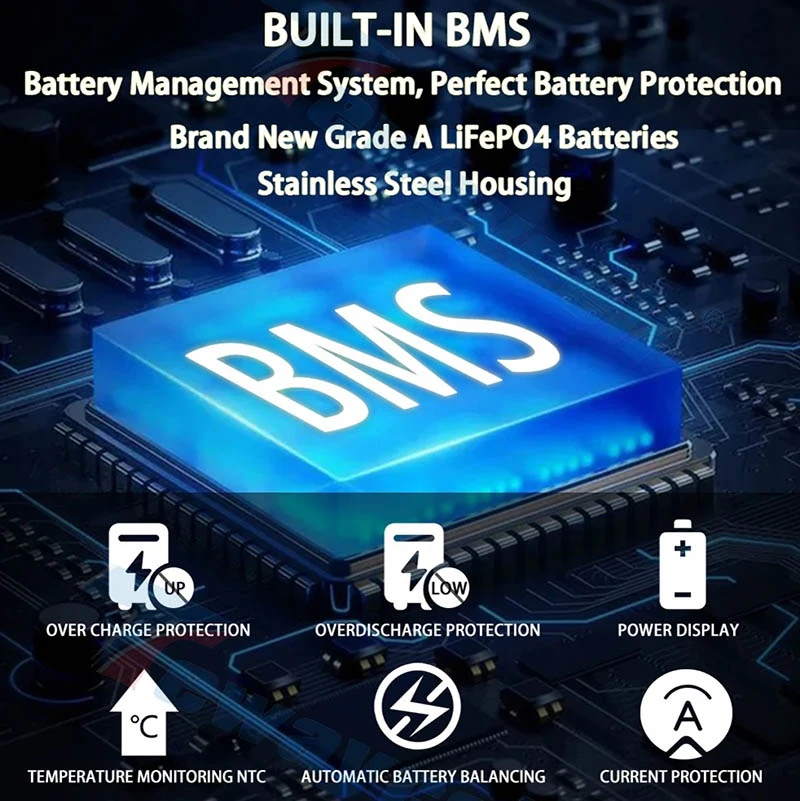
What Is a Battery Management System (BMS)?
A Battery Management System (BMS) is the “brain” of a solar battery. It monitors, controls, and protects each individual cell to ensure the entire system operates safely and efficiently.
Think of it as the control tower that keeps your solar energy storage system balanced. Without a BMS, your battery could overcharge, over-discharge, or overheat, leading to reduced capacity or even permanent failure.
At JSBESS, our advanced BMS technology integrates both hardware protection and AI-driven software analytics to maximize system safety and optimize power output for homes and businesses.
Modern BMS systems, especially those used in JSBESS lithium-ion and LFP batteries, go beyond simple voltage monitoring. They actively manage each cell and maintain ideal performance conditions. Below are some key features of a modern BMS.
1. Cell Voltage Balancing
Every battery pack contains multiple cells that must charge and discharge evenly. A BMS ensures this balance to prevent one cell from degrading faster than others, a key to prolonging cycle life.
2. Temperature Monitoring and Thermal Management
Temperature is a major factor affecting battery safety and efficiency. A JSBESS BMS continuously measures cell temperature, triggering cooling or shutdown if limits are exceeded. In hot climates like Riyadh or Karachi, this feature is crucial to prevent thermal runaway.
3. State of Charge (SOC) and State of Health (SOH) Tracking
By analyzing real-time voltage, current, and temperature, the BMS estimates SOC (available charge) and SOH (overall battery condition). These insights help users understand when to charge, discharge, or service their systems.
4. Overcurrent & Short-Circuit Protection
The BMS immediately disconnects power in case of overload or short circuits, preventing damage to both the battery and connected inverter systems.
5. Data Logging and Remote Communication
All modern JSBESS systems support communication protocols like CAN Bus, RS485, RS232 and Modbus, enabling smooth integration with hybrid inverters, EMS platforms, and IoT dashboards. Users can view performance data remotely via app or browser, improving transparency and ease of control.
How a BMS Protects and Extends Battery Life?
A solar battery without a proper BMS is like driving a car with no engine sensors, you’d never know something’s wrong until it breaks.
A high-quality BMS helps extend your battery’s lifespan by preventing overcharging and deep discharging, which cause irreversible chemical damage, balancing cells to maintain consistent voltage levels across the pack, monitoring temperature to avoid heat-related degradation and providing early alerts for maintenance before failure occurs.
At JSBESS, our proprietary SmartSync™ BMS is engineered to work seamlessly with hybrid inverter systems. It not only protects each cell but also adapts charge/discharge rates based on temperature and load conditions, optimizing energy efficiency and extending overall system life.
Comparing BMS Technologies: LFP vs NMC vs Lead-Acid
The complexity of a BMS depends largely on the battery chemistry.
| Battery Type | Typical BMS Complexity | Notes |
| LFP (LiFePO₄) | Moderate | Stable chemistry, excellent thermal safety, widely used in JSBESS systems |
| NMC (Nickel Manganese Cobalt) | High | Requires more advanced temperature and voltage balancing |
| Lead-Acid | Low | Simple charge control; often uses basic monitoring instead of full BMS |
Why LFP Wins for Hot Climates? LFP batteries paired with smart BMS controls perform exceptionally well in hot and humid regions like Dubai, Chennai, and Kuala Lumpur due to their superior heat tolerance and long cycle life (up to 6,000+ cycles).
How to Know if Your BMS Is Working Properly? A functioning BMS should provide stable voltage readings across all cells, no unexplained power cuts or errors, accurate state-of-charge data displayed on the inverter or app and normal temperature range during charging/discharging.
If you notice discrepancies, voltage imbalance, or communication errors, it may indicate a BMS malfunction, a situation that requires professional inspection. JSBESS offers remote diagnostic support, allowing our technicians to analyze your system online, ensuring faster troubleshooting without unnecessary downtime.
A commercial solar installation in Sharjah, UAE, experienced repeated shutdowns due to voltage imbalance during peak summer heat. After replacing the legacy BMS with JSBESS SmartSync™, the system’s performance stabilized, and energy throughput increased by 12% within a month. Such cases highlight how an intelligent BMS isn’t just a safety tool, it is a performance enhancer that boosts ROI and system reliability.
How Do Solar Battery Warranties Work: What Is and Isn’t Covered?

Solar battery warranties define how long your energy storage system is protected and under what conditions the manufacturer will repair or replace it. Most warranties cover manufacturing defects, performance degradation beyond a certain limit (for example, retaining at least 70–80% capacity after 10 years), and sometimes labor or transport costs. However, coverage varies between brands and models, making it crucial to read the fine print before purchasing.
On the other hand, warranties typically don’t cover damage caused by improper installation, neglect, extreme weather, or unauthorized modifications. Some also exclude issues arising from overuse, poor maintenance, or incompatible system components. Understanding what is not covered helps users plan better maintenance and avoid voiding their warranty. At JSBESS, customers receive transparent warranty terms and expert support to protect their solar investment and ensure reliable long-term performance.
Understanding the Purpose of a Solar Battery Warranty
A solar battery warranty is your assurance that the product will perform reliably over a specified period, typically 5 to 15 years, depending on the brand and technology. It protects you against premature failure, manufacturing defects, and excessive performance loss.
For high-end systems like JSBESS, warranties aren’t just paperwork, they’re part of a total reliability ecosystem. Our coverage includes both product warranty and performance guarantee, ensuring that your investment stays secure for the long term.
Types of Solar Battery Warranties
Warranties can vary between manufacturers, but most include the following core types:
1. Product (Material & Workmanship) Warranty
This covers defects in manufacturing, materials, or assembly. If a JSBESS battery malfunctions due to a factory fault, it will be repaired or replaced under this warranty. Typical duration lastss 10 years for lithium batteries, it covers manufacturing defects, faulty components, or hardware malfunctions.
2. Performance Warranty
Every lithium battery gradually loses capacity over time. A performance warranty ensures the battery retains a minimum percentage of its original capacity, usually 60–80% after 10 years or a specified number of cycles.
For example, a JSBESS 10 kWh battery might guarantee at least 7.5 kWh of usable capacity after 10 years or 6,000 cycles, whichever comes first.
3. Installation Warranty (if installed by an authorized partner)
When installed by certified JSBESS technicians, this warranty covers installation errors or issues related to improper mounting, wiring, or connection. Such warranties ensure that both the product and its integration are fully protected.
What’s Typically Covered Under Warranty?
Here is what a quality warranty like JSBESS includes:
| Category | Covered by Warranty |
| Material defects | Yes |
| Manufacturing errors | Yes |
| Premature capacity loss (within limits) | Yes |
| Software faults (BMS or firmware) | Yes |
| Normal degradation (within warranty rate) | Yes |
| Authorized repair & replacement | Yes |
This comprehensive approach ensures you’re covered against the most common issues that affect battery performance or lifespan.
What Isn’t Covered Under Warranty?
Even the most comprehensive warranty won’t cover every issue, especially those caused by external or user-related factors. Common exclusions include improper installation by non-certified technicians, physical damage from impact, fire, or flooding, unauthorized modifications or opening the battery enclosure, neglect or lack of maintenance (e.g., failing to clean terminals or ignoring BMS alerts) and overcharging or deep discharging due to incompatible inverter settings.
This is why JSBESS emphasizes professional installation and regular system checks, they ensure compliance with warranty conditions and prevent accidental voids.
Cycle Life & Performance Clauses Explained
Solar battery warranties often include cycle life limits, a measure of how many charge/discharge cycles the battery is expected to endure before capacity drops below a threshold.
For example:
6,000 cycles at 80% depth of discharge (DOD)
10 years of operation
These clauses balance real-world performance expectations with technical limitations. High-quality lithium iron phosphate (LFP) batteries like JSBESS typically outperform warranty terms, often exceeding 7,000+ cycles with proper care.
How to File a Warranty Claim? JSBESS makes the warranty claim process simple and transparent:
- Contact Support: Reach out to the authorized distributor or installer where your battery was purchased.
- System Diagnostics: The JSBESS team will review BMS logs remotely to identify fault patterns or component errors.
- Assessment: If confirmed as a manufacturing fault, the battery will be replaced or repaired at no cost under warranty.
- Resolution: Replacement units are dispatched within 7–14 working days depending on location and logistics.
For international markets such as Australia, India, and the UAE, JSBESS maintains regional service partners to ensure prompt response and minimal downtime.
Some Tips to Keep Your Warranty Valid
Follow these best practices to ensure your warranty remains intact.
- Always use JSBESS-approved hybrid inverters and communication protocols.
- Schedule annual maintenance through certified technicians.
- Avoid storing batteries in extreme heat or moisture.
- Keep a record of installation certificates and service logs.
- Register your product online within 30 days of purchase to activate extended coverage.
Performance Degradation and Customer Assurance
Even the best lithium batteries experience gradual degradation over time. The key difference lies in how predictable and slow that degradation is.
At JSBESS, our LFP cells are engineered for low degradation rates (<2% per year) and feature AI-based charge management, reducing stress on the battery. This ensures your real-world performance stays above warranty limits, protecting your ROI.
How Do Solar Battery Rebates and Incentive Programs Vary by State/Country?

Solar battery rebates and incentive programs differ widely across regions, reflecting each government’s renewable energy goals and funding capacity. In Australia, for example, federal and state-level schemes like the Solar Homes Program (Victoria) or Rebate for Home Battery Storage (South Australia) offer generous discounts or low-interest loans to encourage adoption.
In South Asia, countries such as India and Bangladesh are expanding solar subsidy programs, often combining solar panel and battery incentives to make clean energy more affordable for households and small businesses. In the Middle East, nations like the UAE and Saudi Arabia are launching incentive frameworks focused on solar-plus-storage to diversify their energy mix and reduce grid dependency.
However, eligibility, rebate amounts, and application processes vary by country and even by province. JSBESS helps customers navigate these regional programs, ensuring they capture maximum financial benefits and accelerate the transition toward cost-effective, sustainable energy solutions.
Australia Has Strong National & State-Level Rebates
Australia remains one of the most incentive-rich solar battery markets in the world.
Small-scale Renewable Energy Scheme (SRES):
Provides Small-scale Technology Certificates (STCs) that can reduce system costs by AUD 2,000–4,000 depending on size and region.
Battery Energy Storage Systems (BESS) Grants:
Targeting community-scale storage, these grants offer funding to households integrating batteries with rooftop solar.
| State | Program | Incentive |
| Victoria | Solar Homes Program | Up to AUD 4,174 for battery installation |
| South Australia | Home Battery Scheme | Rebate of AUD 3,000 for residential storage |
| New South Wales | Empowering Homes Program | Low-interest financing up to AUD 14,000 |
| Queensland | Energy Efficient Appliance Rebate | Incentives for hybrid systems |
South Asia – Rapid Growth Through Subsidy-Driven Programs
In South Asia, especially India, Pakistan, and Sri Lanka, the focus has shifted toward decentralized renewable energy generation.
The Ministry of New and Renewable Energy (MNRE) in India launched multiple schemes:
- National Rooftop Solar Phase II: 30–40% subsidy for residential systems.
- Battery Incentive under the Production Linked Incentive (PLI) Scheme:
- Encourages local lithium-ion cell manufacturing, reducing battery costs.
- Net Metering Policies, Most states now allow energy export with credit offsets, improving ROI on storage.
Pakistan & Sri Lanka, Pakistan’s Alternative Energy Development Board (AEDB) offers tax exemptions and import duty relief for solar batteries. Sri Lanka’s Soorya Bala Sangramaya Program provides subsidized loans for solar storage systems.
JSBESS supports South Asian partners, such as Pakistan, Bangladesh, Sri Lanka, Afghanistan, India and Myanmar, through localized installation training and battery lifecycle management tools, ensuring compliance with local incentive frameworks and grid regulations.
Middle East – Emerging Incentive Landscape
The Middle East, led by the UAE, Saudi Arabia, and Oman, is fast catching up through strategic clean energy initiatives.
In United Arab Emirates, DEWA’s Shams Dubai Program offers net metering and full credit for excess solar energy exported to the grid. Homeowners combining JSBESS storage with rooftop PV systems can offset up to 100% of monthly bills. Masdar Clean Energy Fund provides low-interest financing for hybrid storage projects.
In Saudi Arabia & Oman, Saudi Vision 2030 includes tax incentives for localized solar manufacturing. Oman’s Authority for Public Services Regulation (APSR) supports distributed generation with storage rebates up to 15% of total system cost for early adopters.
JSBESS is currently expanding distributor partnerships in the GCC, offering tailored battery packs optimized for high-temperature performance, a critical factor for desert environments.
The Role of Rebates in Accelerating Solar Battery Adoption
Rebates and government-backed incentives have been instrumental in expanding renewable energy use globally. In regions like Australia, India, and the UAE, rebate programs significantly lower the upfront cost of installing solar + storage systems, making clean energy more affordable to both households and SMEs.
JSBESS, as a global provider of energy storage systems, closely collaborates with local solar distributors and installers to help customers access applicable rebates and optimize financing structures, ensuring faster ROI and sustainability compliance.
JSBESS-certified partners in Melbourne, Sydney, and Adelaide assist in paperwork filing, system verification, and installation documentation to ensure homeowners fully capture available subsidies. JSBESS is an approved and qualified BESS battery energy storage system manufacturer listed on Austrialia CEC, this enables the end users to apply for rebates officially from government.
How to Find and Claim Rebates?
Here is a step-by-step guide from JSBESS.
Check local eligibility: Verify program details on your state’s renewable energy authority website.
Get a JSBESS-certified quote: Ensure the product and installer are approved under the rebate program.
Submit documentation: Include installation photos, battery serial numbers, and energy output certifications.
Claim rebate or offset: Either as a direct cashback or invoice deduction.
Solar Battery Leasing vs Buying: Pros & Cons
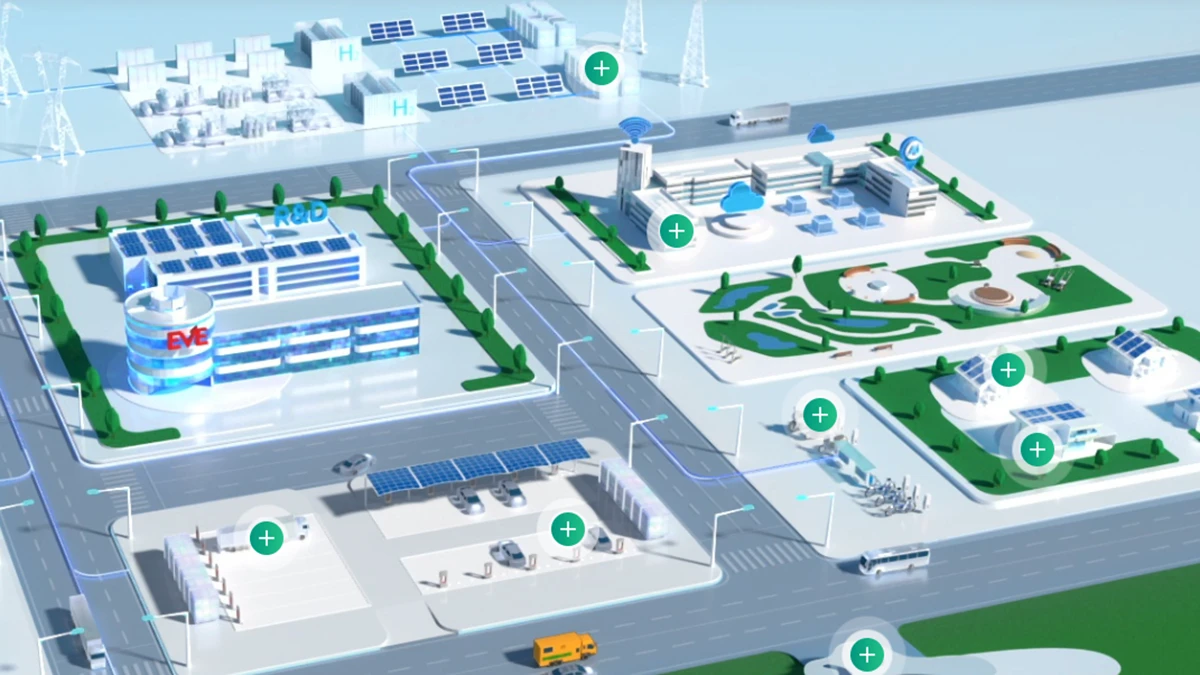
Solar battery leasing allows homeowners or businesses to use a storage system without owning it outright. You pay a fixed monthly fee, while the provider (often partnered with brands like JSBESS) installs, maintains, and monitors the system.
It’s popular in markets like Australia and the UAE, where upfront solar costs can be high but financing options are flexible.
Pros of Leasing:
- No upfront capital investment
- Maintenance covered by provider
- Ideal for short-term property ownership
- Access to premium systems with minimal cost
Cons of Leasing:
- You don’t own the asset, no resale value
- Savings limited compared to full ownership
- Termination fees may apply before contract end
Buying a Solar Battery: Building Long-Term Value
When you buy your solar battery, either outright or via low-interest financing, you own all generated energy savings.
wnership also allows you to qualify for government rebates, customize your BMS settings and backup options, Integrate with smart home systems and enjoy free energy for years after payback.
For example, a 10 kWh JSBESS battery system in Australia typically pays for itself in 4 to 6 years, depending on grid tariffs and solar generation.
Lease vs Buy: Cost Comparison
| Aspect | Leasing | Buying |
| Upfront Cost | Low (USD 0–500 setup fee) | High (USD 4,000–9,000) |
| Ownership | No | Yes |
| Maintenance | Included | Owner’s responsibility |
| Rebates | Usually not eligible | Fully eligible |
| ROI | Medium-term | Long-term |
| Ideal For | Renters or short-term users | Homeowners and investors |
If you’re a homeowner or business owner with a long-term property horizon, buying yields higher ROI. However, if you want to test solar storage or avoid upfront spending, leasing offers flexibility with guaranteed performance.
Hybrid Models – The Future of Solar Ownership
In 2025, new hybrid models are emerging, combining lease-to-own, performance-based contracts, and subscription-based batteries.
JSBESS is pioneering SmartLease Plans in partnership with local distributors:
- Lease the system for 3–5 years
- Option to buy at residual value
- Full maintenance and monitoring coverage
- Eligibility for rebates in select regions
This structure bridges the gap between accessibility and ownership, ideal for markets like India, Pakistan, and Saudi Arabia, where financing infrastructure is still developing.
The ROI Perspective
- Buying: Higher long-term savings (up to 25–30% energy cost reduction after payback).
- Leasing: Lower entry barrier but total lifetime cost is slightly higher.
- Hybrid: Balanced moderate upfront cost with eventual ownership benefit.
JSBESS analytics show that homeowners switching from leasing to ownership after 3 years typically improve net savings by USD 1,200–2,000 over a 10-year span.
Choosing between leasing and buying comes down to your budget, property tenure, and energy goals.
- Buy if you aim for energy independence and long-term ROI.
- Lease if you need short-term flexibility and zero maintenance.
- Hybrid plans offer the best of both worlds, especially with JSBESS SmartLease, which simplifies transition from user to owner.
Regardless of your choice, investing in a solar battery system through JSBESS guarantees performance reliability, premium safety standards, and regional support across Australia, South Asia, and the Middle East.
Making Smart Decisions for Long-Term Energy Independence
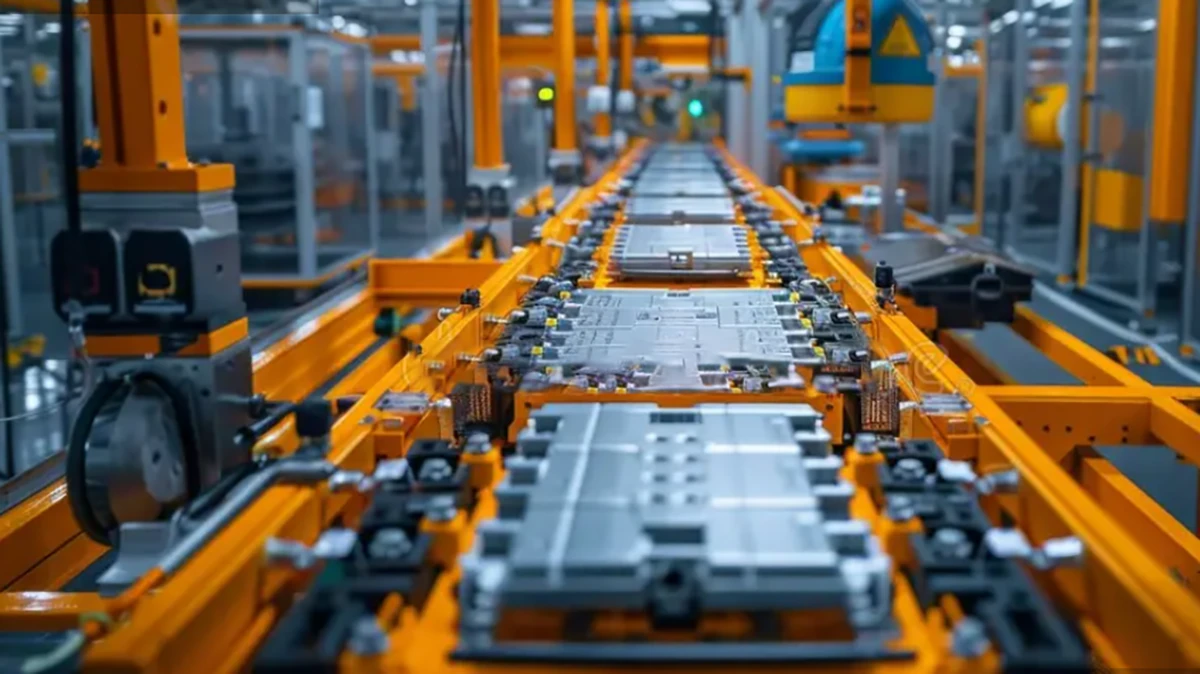
When considering a solar battery investment, it’s not enough to look at the upfront price tag, the real measure of value lies in the Total Cost of Ownership (TCO).
TCO represents the entire lifecycle cost of your solar storage system, including Initial purchase or lease cost, Installation and configuration fees, Maintenance and replacement parts, Operational efficiency losses or savings and Residual value at end-of-life.
A premium battery from JSBESS may have a slightly higher purchase cost, but its longer cycle life (6,000+ cycles), high thermal resilience, and low maintenance requirements drastically reduce long-term expenses, leading to a lower TCO over 10–15 years.
A low-cost battery that lasts 3 years at 80% performance may seem cheaper upfront, but replacing it twice over 9 years will cost 40–60% more than a durable JSBESS LFP system that runs efficiently for over a decade.
Below Chart are Key Factors in TCO Analysis
| Factor | Impact | Optimization Strategy |
| Efficiency | Higher efficiency = faster ROI | Choose ≥95% round-trip efficiency systems |
| Cycle Life | Determines lifespan and payback period | Prefer ≥6,000 cycles with warranty support |
| Maintenance | Impacts downtime & reliability | Regular JSBESS maintenance plans |
| Warranty | Protects from costly replacements | Opt for full-coverage, performance-based warranty |
| Software Updates | Extends system value | Ensure remote upgrade capabilities |
A well-calculated TCO doesn’t just reflect the cost, it highlights the sustainability and stability of your energy investment.
Combining Maintenance, Warranty, and Incentives for Maximum ROI
Your system’s ROI doesn’t rely on one factor alone, it’s the synergy of maintenance, warranty protection, and available rebates that creates the greatest long-term value.
1. Regular Maintenance = Extended Battery Life
Routine maintenance ensures that your battery operates at optimal voltage and temperature. JSBESS SmartCare™ Maintenance Plans include Remote diagnostic checks, Firmware updates for BMS optimization and Cell health reports and SOC calibration. These proactive measures can extend usable capacity by 10–15% over the battery’s lifespan.
2. Warranty: Your Long-Term Insurance
A robust warranty protects your investment. JSBESS offers 10-year performance warranties, covering both capacity retention and manufacturing defects. This provides confidence in ROI projections and minimizes financial risks from premature degradation.
3. Incentives: Reducing Upfront Cost
In regions like Australia and India, combining local rebates with JSBESS-approved systems can lower upfront costs by 25–40%. Paired with energy savings and net-metering benefits, this results in a 3–6 year payback period, after which your battery essentially produces free stored power.
When all three, maintenance, warranty, and incentive, are aligned, you achieve maximum system reliability and accelerated ROI, ensuring true energy independence for the next decade or more.
Future Outlook — AI-Driven Smart Battery Management Systems
The next era of solar energy storage is being defined by AI-driven intelligence, predictive analytics, and grid-level adaptability.
1. Predictive Maintenance Through AI
JSBESS is pioneering AI-powered diagnostic platforms that continuously analyze real-time data from each battery module. By detecting voltage drift, temperature anomalies, and degradation trends, the system can predict potential issues before they occur, cutting downtime and preventing costly replacements.
2. Dynamic Energy Optimization
AI-enhanced BMS platforms intelligently learn your household or business energy patterns, deciding when to Charge from solar, Discharge for self-consumption and Sell energy back to the grid during peak tariff hours. This level of automation allows JSBESS users to increase energy savings by up to 20–25% annually, particularly in dynamic-tariff regions like Australia and the Middle East.
3. Grid Interaction & Virtual Power Plants (VPPs)
The future of storage lies in connectivity. AI-integrated systems can communicate with utility grids to form Virtual Power Plants (VPPs), decentralized networks of small-scale batteries that stabilize grid demand and create new revenue streams for users.
In markets like Dubai, Adelaide, and Mumbai, VPP pilots have already demonstrated the potential of community-based energy trading, where battery owners earn credits for supplying power during peak hours.
With JSBESS AI-BMS technology, users will soon experience autonomous energy ecosystems that balance sustainability, economics, and performance, unlocking a new era of smart, self-sufficient energy living.
Energy independence isn’t just about cutting ties with the grid, it’s about making informed, future-ready decisions. By evaluating TCO, combining warranty + maintenance + incentives, and embracing AI-powered smart management, you set the foundation for a sustainable, profitable, and reliable energy future.
JSBESS remains committed to empowering homes and businesses with cutting-edge solar storage technology, ensuring that every user, from Sydney to Sharjah to Surat, enjoys maximum efficiency, safety, and ROI on their path toward true energy independence.
If you would like to know more about solar battery energy storage systems, please refer to the page The 10 Best Solar Battery Energy Storage System Manufacturers in China (Approved in 2025).