
Solar Battery Performance and Charging Time
Solar battery energy storage has become one of the most transformative technologies of the clean energy revolution. As solar panels become more affordable and efficient, homeowners and businesses are looking for ways to store solar energy for use at night or during power outages. That’s where solar batteries come in.
A solar battery energy storage system captures excess power generated by your solar panels and stores it for later use. This means you can maximize your self-consumption, lower your electricity bills, and enjoy energy independence.
In 2025, with energy prices rising and power grids becoming increasingly unstable, solar batteries have shifted from a luxury upgrade to a mainstream necessity. According to BloombergNEF, global battery energy storage installations are expected to exceed 500 GWh by 2030, driven by residential, commercial, and utility-scale demand.
This guide breaks down everything you need to know, how long does charging a solar battery take, how to optimize performance, how solar batteries work, how long they last and what they cost, and how to choose the right system for your needs.
Note: The brands listed are not ranked in any particular order.
Disclaimer: The company names, founding dates, and addresses are sourced from publicly available information online.
Please note: The list in this guide is not exhaustive. There may be other reputable solar battery brands worth considering.
- Solar Battery Performance and Charging Time
- How Long Does Charging a Solar Battery Take
- How Does Temperature Affect Solar Battery Performance
- Are Hybrid Solar Battery Systems Better Than Separate Systems
- Can You Retrofit a Solar Battery to an Existing Solar Panel System?
- How Solar Batteries Work
- What Are Common Solar Battery Failures and How to Prevent Them
- How Long Do Solar Batteries Last and When Should You Replace Them?
How Long Does Charging a Solar Battery Take
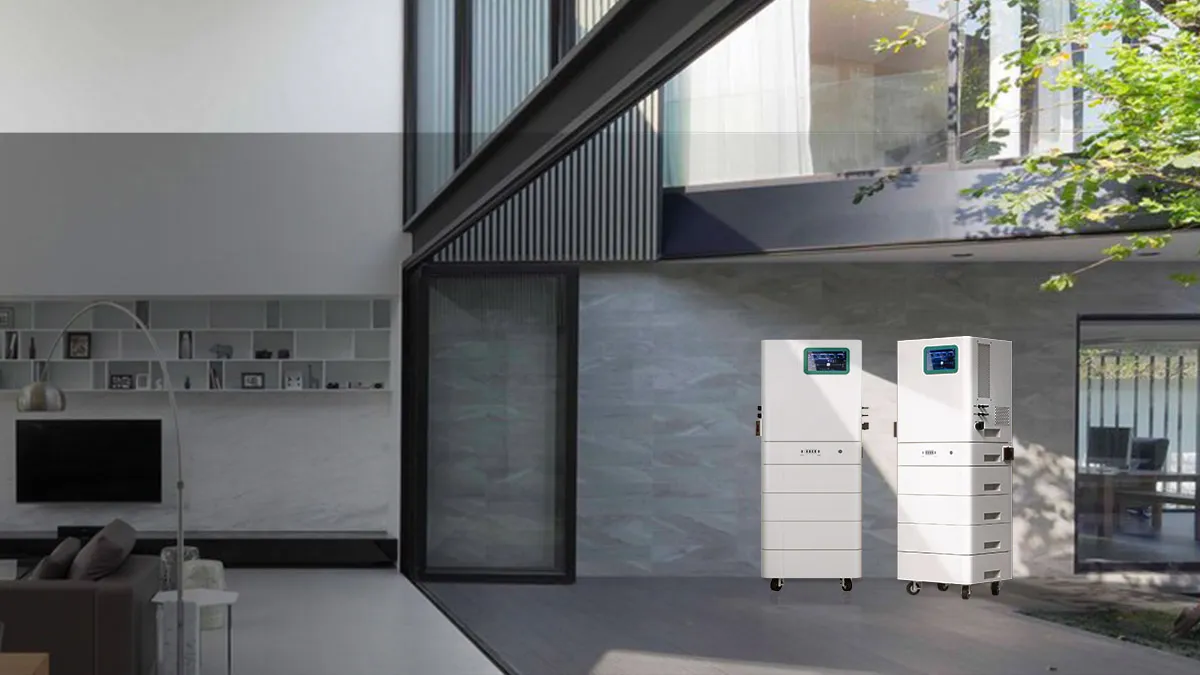
The time it takes to charge a solar battery depends mainly on the battery capacity, solar panel size, sunlight intensity, and inverter efficiency. On average, a typical home solar battery (around 10 kWh) takes about 5 to 8 hours to fully charge on a sunny day using a well-sized solar array. However, if the sunlight is weak or the panels are undersized, the charging time may extend to 10 hours or more.
For example, if you equip a solay system with a 5kw hybrid inverter and 10kwh solar battery, technically speaking, it will take less than 2 hours to get solar battery fully charged. You may be wondering how this number been calculated, please keep this in mind: the battery fully charging time equals to battery capacity kwh to be divided by inverter power killowatt. Hours=KWH/KW
In practice, several factors affect the actual charging time of a solar battery, including solar panel output, sunlight conditions, inverter efficiency, and battery charge rate (C-rate).
Here’s an improved and more accurate version with a refined formula: Charging Time (hours)=Battery Capacity (kWh)/Charging Power (kW)
If you have a 5 kW hybrid inverter paired with a 10 kWh solar battery, the theoretical charging time can indeed be estimated using the formula, So, 10÷5=210 \div 5 = 210÷5=2 hours in an ideal case, meaning if the inverter delivers a constant 5 kW of power for 2 hours, the 10 kWh battery would be fully charged.
Charging is rarely 100% efficient
However, in the real world, you must consider
- Solar panel generation: Actual solar input often fluctuates due to cloud cover, shading, or time of day.
- Inverter and system efficiency: Typically around 90–95%, so not all the energy goes directly into the battery.
- Battery charging profile: Lithium batteries charge rapidly up to about 80%, then slow down for the final 20% to prevent overcharging.
Taking these into account, the realistic formula becomes Charging Time (hours)=Battery Capacity (kWh)/Inverter Power (kW)×Efficiency Factor, where the Efficiency Factor (η) typically ranges between 0.85 – 0.95.
If your system has
- Battery capacity: 10 kWh
- Inverter power: 5 kW
- System efficiency: 90% (0.9)
Then, Charging Time=105×0.9=2.22 hours\text{Charging Time} = \frac{10}{5 \times 0.9} = 2.22\ \text{hours}Charging Time=5×0.910=2.22 hours
So, under typical conditions, it would take roughly 2 to 2.5 hours to fully charge your 10 kWh solar battery with a 5 kW inverter, assuming consistent sunlight and stable system performance.
The charging time depends on battery capacity, solar array size, and sunlight availability.
For faster charging, systems with larger solar arrays or hybrid inverters can optimize energy flow and reduce charge time. Advanced LiFePO₄ (lithium iron phosphate) batteries also charge more efficiently and safely compared with lead-acid types. In short, while most solar batteries reach full charge within a single daylight cycle, actual time varies with system size, weather, and power usage.
| Battery Capacity | Solar Array | Approx. Charge Time |
| 5 kWh | 3 kW | 2–3 hours |
| 10 kWh | 5 kW | 4–6 hours |
| 20 kWh | 10 kW | 6–8 hours |
Factors like cloud cover, inverter efficiency, and temperature can affect these numbers. If you have a hybrid inverter, you can combine solar + grid charging to top up your battery faster, especially before expected blackouts.
Here’s a visual chart showing how charging time varies throughout the day based on sunlight intensity and inverter efficiency.
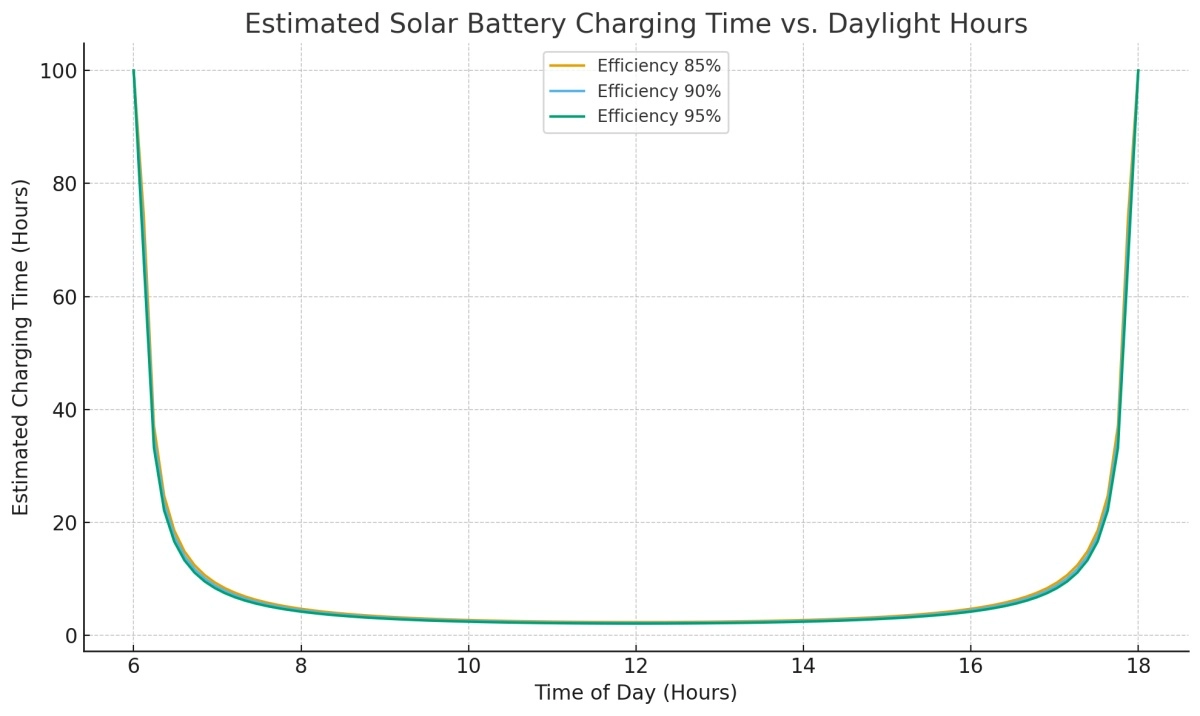
During midday (around 11 AM–2 PM), sunlight intensity peaks, the inverter runs near full power, giving the shortest charging times. In early morning or late afternoon, weaker sunlight causes longer charging durations. Higher system efficiency (95%) noticeably improves performance, reducing charging time by up to 30% compared with lower efficiency setups.
How Does Temperature Affect Solar Battery Performance
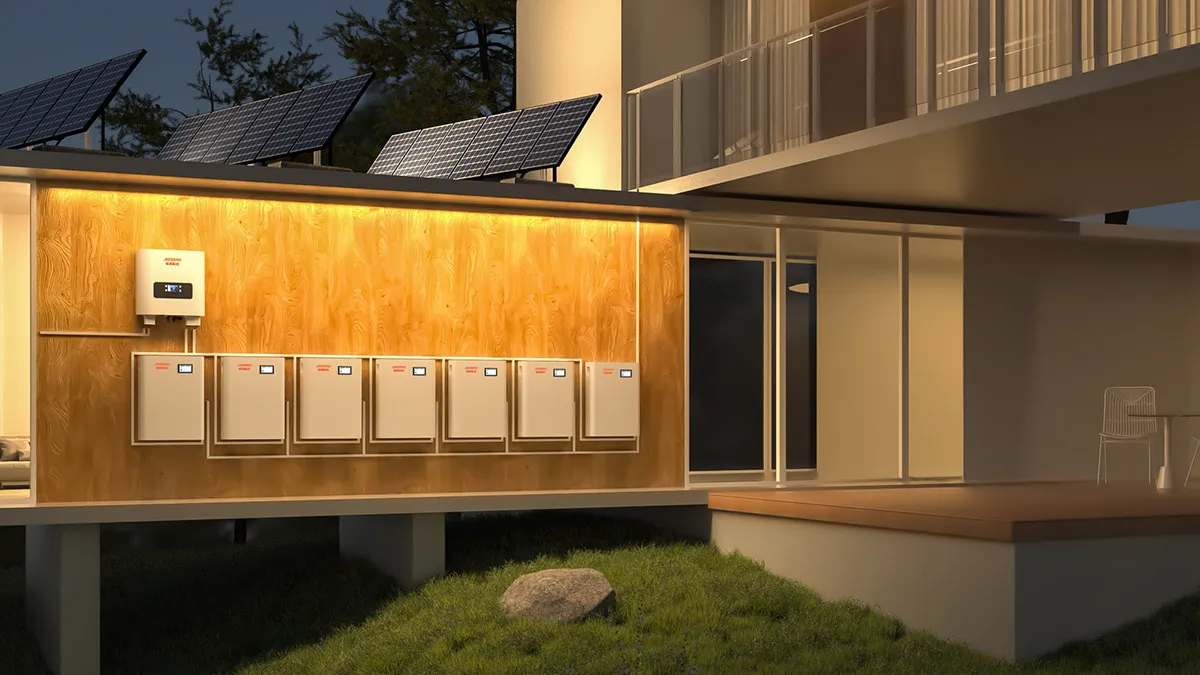
Temperature has a direct impact on how efficiently a solar battery stores and delivers energy. When the temperature drops too low, the chemical reactions inside the battery slow down, leading to reduced capacity, slower charging, and limited power output. On the other hand, excessive heat accelerates internal chemical reactions, which can cause faster degradation, shorten battery lifespan, and in severe cases, lead to safety risks such as overheating or swelling.
To maintain optimal performance, solar batteries work best within a moderate temperature range — typically between 15°C and 30°C (59°F to 86°F). Proper installation, ventilation, and temperature management systems help protect batteries from extreme conditions. By keeping the temperature stable, users can ensure longer battery life, more consistent energy storage, and greater overall system efficiency.
Temperature plays a critical role in how well a solar battery operates. Like other electrochemical devices, batteries navigate a delicate balance, too cold, and reaction rates slow; too hot, and degradation accelerates. In this article, we’ll explore why temperature matters, how performance is affected across temperature extremes, and what strategies help maintain optimal operation.
1. Thermodynamics & Electrochemistry: Why Temperature Matters in Batteries
At the heart of a solar battery are electrochemical reactions where ions move between electrodes through an electrolyte. Temperature influences every step of that process:
- Reaction Kinetics: Higher temperatures accelerate chemical reactions, making ion migration easier and reducing internal resistance. Conversely, at low temperatures, ionic mobility slows, making it harder for the battery to charge or discharge efficiently.
- Equilibrium Shifts & Parasitic Reactions: Elevated temperatures push equilibrium toward side reactions (e.g. electrolyte decomposition, cathode/electrolyte interface breakdown) that do not contribute to energy storage and instead degrade the battery’s materials.
- Thermal Activation: Some internal failures (e.g. dendrite formation, gas evolution, separator breakdown) become possible only above certain temperature thresholds.
- Entropy & Battery Voltage: Temperature also impacts the open-circuit voltage of cells through thermodynamic entropy terms — meaning cells at different temperatures for the same state-of-charge may exhibit different voltage levels.
Because of these fundamentals, battery manufacturers specify safe operating temperature windows and derating curves that reduce allowable current at temperature extremes.
2. Performance Impacts: Capacity Loss, Internal Resistance & Charging Speed
When a battery operates outside its optimal thermal window, its performance suffers in several measurable ways:
- Reduced Capacity at Low Temperature: In cold conditions (for example, near or below 0 °C / 32 °F), available capacity can drop sharply. The battery simply cannot deliver its full rated energy because ions move slowly, and parts of the cell become less active.
- Higher Internal Resistance: Low temperature increases internal resistance, which leads to voltage drops under load. This means under heavy demand, the battery can’t sustain voltage and may shut down prematurely.
- Slower Charging Rates: In cold states, charging must be slower to avoid damaging the battery. Some systems restrict charge current below a certain threshold until the battery temperature increases.
- Faster Degradation at High Temperature: Operating at high ambient temperatures (say, over 40 °C / 104 °F) accelerates aging. Mechanisms such as electrolyte breakdown, increased side reactions, electrode structural change, and loss of active material are more pronounced.
- Uneven Aging / Thermal Gradients: If part of the battery pack is warmer than another, the warmer region will degrade faster. Over time, that imbalance can reduce overall capacity and shorten useful life.
Because of these impacts, battery datasheets often include derating curves, showing maximum permitted current or capacity as a function of temperature. For instance, at 10 °C, maybe only 70% of the nominal rate is safe.
3. Temperature Control Strategies: Design, Cooling, Insulation & Monitoring
To maintain optimal performance and prolong life, effective temperature control is essential. Below are strategies and best practices:
3.1 Passive Design & Placement
- Place battery modules in shaded locations, away from direct sunlight.
- Use insulated enclosures to buffer against abrupt outdoor temperature swings.
- Provide natural ventilation or heat sinks integrated into battery housing.
3.2 Active Thermal Management
- Use air cooling (fans, ducts) for warm climates.
- Use liquid cooling / heat pipes in high-performance or compact systems.
- In cold climates, integrate heaters or thermal blankets to raise battery to minimal safe temperature before charging.
3.3 Smart Control & Adaptive Operations
- Implement temperature-based charge/discharge limits: e.g. reduce current at low/high temps.
- Use predictive control: anticipate weather, preheat before cold night, or pre-cool during hot day.
- Monitor individual cell or module temperatures via BMS and adjust load dynamically.
3.4 Maintenance & Monitoring
- Set alerts for over-temperature or under-temperature events.
- Periodically inspect thermal insulation, seals, fans, and heating elements.
- Use historical thermal data to identify patterns (e.g. one cell consistently hotter) and proactively adjust load distribution.
Temperature has a direct impact on a battery’s capacity, charging speed, and lifespan. Temperature critically governs a solar battery’s performance and longevity. The underlying thermodynamics mean that both cold and hot conditions impose penalties, whether through sluggish chemistry, increased resistance, or accelerated aging.
To mitigate these effects, combining thoughtful physical design, active thermal management, and smart control systems is key. With proper thermal strategies, a solar battery can deliver consistent, reliable performance across seasons and climates.
Are Hybrid Solar Battery Systems Better Than Separate Systems
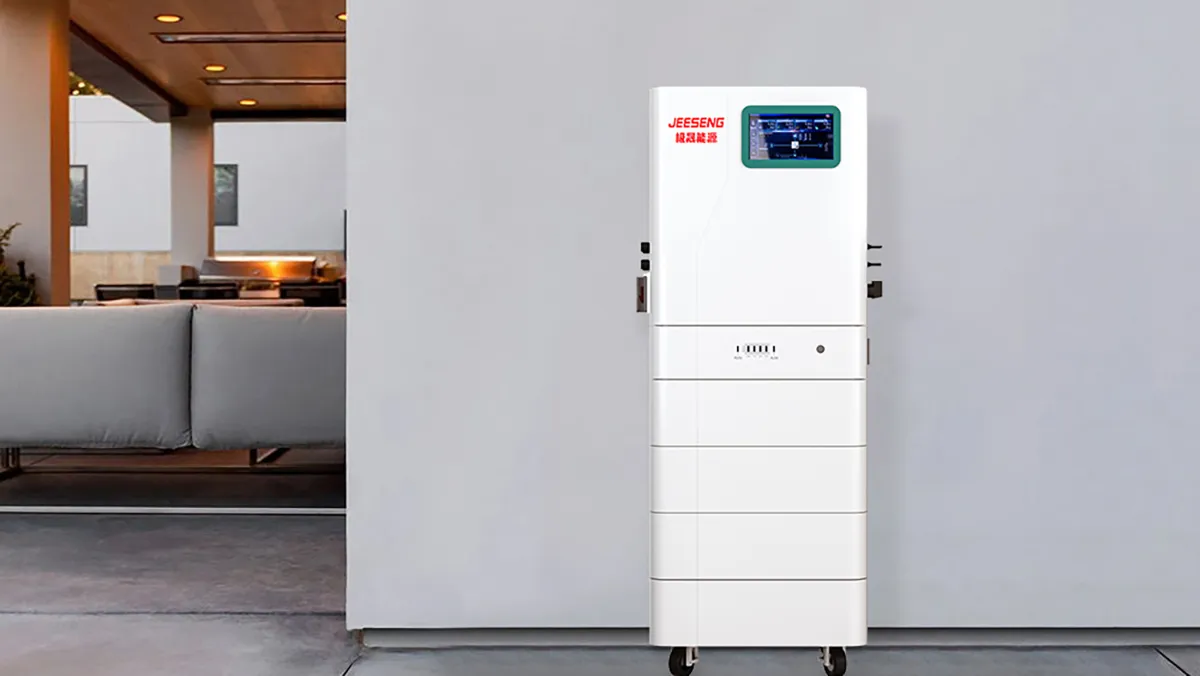
Hybrid solar-battery systems combine solar power generation and energy storage into one integrated setup, using a single hybrid inverter to manage both functions. This design reduces energy conversion losses, simplifies installation, and allows for smarter energy management, automatically deciding when to store, use, or export power.
Because everything works together seamlessly, hybrid systems often deliver higher efficiency and better real-time energy optimization compared to systems where solar panels and batteries operate independently.
However, separate solar and battery systems still offer advantages in flexibility and maintenance. Users can mix and match components from different brands, upgrade parts individually, and isolate failures more easily.
While hybrid systems tend to be more compact and efficient, separate systems provide more control and scalability for future expansion. The best choice ultimately depends on your budget, energy needs, and whether you prioritize simplicity or flexibility in your solar power setup.
Evaluating whether a hybrid solar-battery system outperforms a setup where solar panels and batteries are mostly separate (or loosely coupled) depends on multiple dimensions: how hardware is shared, how energy flows, how costs add up over time, and how flexible or maintainable the system is.
Below we dive into these aspects, comparing hybrid vs separate systems in depth, pointing out where one approach typically wins, and situations where the other has the advantage.
1. Shared Components vs Modular Systems: Hardware & Energy Flow Impacts
One of the key differences between hybrid and separate systems is how much hardware is shared and how many energy conversions occur.
Hybrid systems often use a single hybrid inverter (or inverter/charger) that handles solar power conversion, battery charging/discharging, and interfacing with the grid. Because many functions are combined, you typically reduce the number of power conversion stages.
That means fewer DC-to-AC or AC-to-DC conversions, which reduces losses and improves round-trip efficiency. For example, if solar can directly charge the battery via DC coupling (or through a shared inverter), you may avoid some conversion inefficiencies.
By contrast, separate systems are modular: you may have a solar inverter, plus a separate battery inverter or charge controller, or even separate AC-coupled batteries.
Each module may introduce its own losses, wiring inefficiencies, and sometimes suboptimal matching of voltages and currents. On the other hand, modularity allows better matching of component sizes and brands, which can sometimes optimize performance if carefully chosen.
Energy Flow Patterns: In hybrid systems, you can often configure smarter energy flows (e.g. surplus solar can go directly to battery without going through grid then back, or sharing inverters helps reduce “clipping” of solar production).
Shared inverters can result in better utilization of solar power, especially during peak insolation, since battery charging can be prioritized without needing separate infrastructure.
However, a downside is that if the shared component (like a hybrid inverter) fails, more of the system may go offline compared to a more modular system where you might isolate failures. Also, shared hardware might require compromises in specification to serve multiple functions.
2. Cost Trade-Offs: Upfront Investment, Lifespan Costs, and Operational Savings
Cost comparison isn’t just about what you pay today, it’s also what you pay over the lifetime of the system, including energy yields, maintenance, and replacements.
- Upfront Costs: Hybrid systems generally have higher initial component cost for the inverter/charger and sometimes require more sophisticated control systems. But savings can come from reduced hardware (fewer separate inverters or charge controllers), less wiring, and streamlined installation. Studies by NREL (US) indicate that installing a PV + battery system simultaneously (a hybrid-like installation) is around 18% cheaper in many residential cases than installing separately.
- Operational Savings & Efficiency Gains: Because hybrid systems reduce energy losses via fewer conversions and better coordination, they tend to deliver more usable energy over time per unit of dollar invested. Also, in regions with time-of-use electricity rates or peak load charges, being able to shift load or supply during high price periods becomes more valuable for hybrid systems that are better integrated.
- Lifespan & Replacement Costs: Batteries degrade over time, and in hybrid systems, components that serve multiple functions may wear out faster or need more robust design to avoid overheating or stress. If one component in a hybrid system fails (say the inverter), more of the system may need replacement, which could increase costs. In separate systems, you might replace or upgrade components individually. Also, modular separate systems may allow incremental upgrades (e.g. add more battery capacity later) with lower marginal costs.
- Incentives & Policy Effects: Some tax credits, rebates, or rate structures favor systems that integrate solar & storage together. In some jurisdictions, hybrid systems may qualify for incentives that separate installations would not. But policy can vary widely.
3. Flexibility & Maintenance: Upgrades, Fault Isolation, and System Resilience
When deciding between hybrid and separate systems, it’s important to consider how flexible the system will be in future, how easy maintenance will be, and how resilient the system is to faults.
- Upgradability: Separate systems typically offer more flexibility. Say you start with solar panels and want to add battery storage in a few years, a modular separate setup may allow you to choose battery brand, size, voltage, etc., without being tied to the specifications of your original inverter. Hybrid systems can also allow future additions, but sometimes the shared inverter or system sizing becomes a limiting factor.
- Fault Isolation & Repair: In separate systems, a failure in the battery inverter or separate charge controller may not impact the solar generation (or vice versa). Components are more isolated. In hybrid systems, because many functions are combined, a single failure might have broader system impact. Also, diagnosing issues might be more complex because multiple functions are embedded in one unit.
- Maintenance Requirements: Hybrid systems may simplify maintenance of certain components (fewer inverters to monitor, fewer inter-component compatibility issues), but the specialized nature of hybrid inverters can mean that servicing, parts, or firmware updates might be more complex or costlier. Separate systems might use more standard parts which are easier to source and replace.
- System Resilience: In scenarios like power outages, grid instability, or harsh environmental conditions, hybrid systems often provide smoother transitions (backup power, automatic switching) because they are designed with integrated controls. But the resilience of hybrid systems depends heavily on the quality of those controls, cooling, and the ability to manage failure modes. Separate systems can also be made resilient, but may require more manual or external logic.
Whether a hybrid solar-battery system is “better” than a separate system depends greatly on your goals, location, scale, and budget. If your priority is maximizing efficiency, reducing energy losses, streamlining installation, and getting seamless backup power, a hybrid system often comes out ahead. But if you value modularity, future upgrade flexibility, easier part replacement, or custom matching of components, a separate system may be more suited.
For many homeowners, a hybrid system offers compelling benefits when the system is well-designed and aligned with local policies (incentives, rates, reliability). For larger or off-grid or custom-scale systems, careful design of separate modules might yield greater long-term resilience and flexibility. Assess your energy usage, expected lifetime, available incentives, and local conditions before choosing.
Hybrid systems integrate solar panels, inverters, and batteries into one seamless setup, simplifying control and improving energy management.
Can You Retrofit a Solar Battery to an Existing Solar Panel System?
Yes, you can retrofit a solar battery to an existing solar panel system, and it’s becoming increasingly common as homeowners look to maximize energy independence and savings. Retrofitting allows you to store excess solar energy generated during the day for use at night or during power outages.
Depending on your current setup, the process may involve adding an AC-coupled or DC-coupled battery system, along with an inverter or battery management system to ensure seamless integration. Modern retrofit solutions are designed to work with most existing grid-tied systems, making upgrades more accessible and cost-effective than before.
However, the ease and cost of retrofitting depend largely on your system’s age, inverter type, and energy usage patterns. Older solar systems may require inverter upgrades or rewiring to ensure compatibility and safety. Working with a certified solar installer helps assess whether your system supports battery add-ons and ensures optimal performance after installation.
By retrofitting a solar battery, you not only enhance your system’s efficiency but also gain better control over your energy use and long-term electricity costs.
Technical Compatibility: Inverter Types, Wiring & System Architecture
One of the first questions to answer is whether your current solar system’s hardware can integrate a battery without replacing everything.
- Inverter Considerations: Many older systems were built with solar inverters that convert DC from panels to AC for home/grid use, but they may not support battery charging or discharging. To retrofit, you might need a hybrid inverter (or add a separate battery inverter). AC-coupled battery systems are often easier to attach without replacing the solar inverter. DC-coupled setups can yield greater efficiency but require more compatibility work.
- Wiring & System Layout: Your existing wiring might not be sized for additional current flowing to/from the battery, or might lack pathways for safe integration. Also, older solar arrays may have different grounding configurations or may use wiring practices that complicate adding battery storage (for example, if the PV array is “positively grounded”, that can conflict with battery requirements). During retrofit, installers often encounter unexpected issues in physical layout or wiring insulation that weren’t a problem when the system was originally installed.
- Battery Chemistry and Voltage Matching: Batteries come with specific voltage ranges and charge/discharge profiles. If your existing inverter/controller isn’t designed to handle the voltage or communication protocol of the battery you want, mismatches can cause inefficiencies, safety risks, or reduced battery lifespan. Choosing a battery that is compatible with the existing inverter or upgrading the inverter may be necessary.
2. Regulatory & Contractual Constraints: Permits, Ownership & Utility Rules
Beyond the technical side, there are often non-technical obstacles to retrofitting.
- Permits & Local Building/Electrical Code: Adding battery storage usually requires new electrical permits. The local authority might require safety inspections, wiring upgrades, or particular enclosures. Sometimes retrofitting changes fall under more stringent rules than new installations. Skipping or ignoring permit requirements can lead to legal issues.
- Ownership & Contracts: If your solar system is under a lease, power purchase agreement (PPA), or third-party ownership, the contract might restrict modifications. The owner, lessor, or installer may have to approve adding storage. Ownership structure can influence eligibility for rebates or incentives.
- Utility and Grid Interconnection Rules: Your utility might have rules about how battery storage interacts with the grid (export limits, anti-islanding, feed-in tariffs, or net metering). Retrofit may require applying updated interconnection approval, safety certification, or updated meter configurations. Some utilities or regulators require specific inverters or safety features for battery systems.
3. Cost, Incentives & ROI: What to Budget, What Helps, What to Expect
A retrofit isn’t free. To decide if it’s worth doing, you should project your costs, savings, and return on investment (ROI).
- Cost Components: Includes the battery itself (capacity and chemistry matter), inverter upgrade (if needed), additional wiring or safety gear, labor, electrical panel modifications, and possibly structural changes. For example, many retrofit installations have unexpected technical challenges that increase costs.
- Incentives & Financial Support: Depending on where you live, you may qualify for tax credits, rebates, or subsidies for solar battery storage. In many regions, combining storage with solar can boost eligibility for favorable programs. Check both federal/state/local incentives.
- Return on Investment & Energy Savings: Savings come from using daytime solar that would have been exported (often for low compensation) instead of buying electricity at higher evening rates, avoiding peaks, and possibly reducing demand charges. But ROI depends on how much solar you already generate, how much you consume during peak/off-solar times, electricity rates, and how much the retrofit costs. Also consider battery degradation over time.
Yes, retrofitting a solar battery to an existing solar panel system is often a feasible and beneficial upgrade, but it isn’t always plug-and-play. Success depends on ensuring compatibility of hardware (inverter, wiring, battery chemistry), navigating regulatory or contractual restrictions, and accurately estimating cost vs savings.
With careful planning and use of reputable installers, retrofits can unlock greater energy independence, reduced electricity costs, and better utilization of solar generation. If you’d like help figuring out whether your specific system can be retrofitted (based on your inverter, wiring, local utility rules), I can walk you through an audit checklist.
How Solar Batteries Work

Solar batteries work by storing the excess electricity generated by solar panels during the day and releasing it when sunlight is unavailable, such as at night or on cloudy days. When solar panels produce more power than a home or business needs, that energy is directed into the battery through a charge controller. Inside the battery, chemical reactions occur, ions move between electrodes through an electrolyte, converting electrical energy into chemical energy for later use.
When the stored energy is needed, the process reverses: the battery discharges, releasing the stored power as electricity to run appliances or feed into the grid. Modern systems use a Battery Management System (BMS) to monitor performance, prevent overcharging or deep discharging, and maintain safety. Combined with smart inverters, solar batteries make it possible to achieve energy independence, improve power reliability, and maximize the value of every kilowatt of solar energy.
Solar batteries are central to expanding solar energy usage: they store energy generated during sunlit hours and release it when needed. But how exactly do they work? What limits their capacity, and what components determine their performance? Below we’ll dive into the technical side, from internal chemical reactions to external system integration.
1. The Science Behind Solar Battery Components: Cells, Electrolytes, & Chemistry
Solar batteries are made up of multiple parts. Understanding these is key to grasping how they store and release energy.
- At the heart are electrochemical cells, each with a pair of electrodes (anode and cathode). When charging, ions move from one electrode to the other via the electrolyte; discharging reverses this movement, producing usable electric current.
- The medium that allows ions to travel between electrodes. Electrolyte chemistry (lithium salts, acid solutions, flow electrolytes, etc.) affects how fast the battery can charge/discharge and how it handles temperature extremes.
- How the battery is built (module layout, cooling/heating, insulation) influences performance, especially in extreme temperatures. Poor thermal design causes faster degradation.
2. Key Performance Metrics: State of Charge, Depth of Discharge, Cycle Life & Efficiency
To understand how well a solar battery will work in practice, these metrics are essential.
- State of Charge (SoC): How full the battery currently is, expressed as a percentage of its total capacity. 100% means fully charged, 0% means fully discharged. SoC is dynamic and changes as the battery charges/discharges.
- Depth of Discharge (DoD): How much of the battery’s capacity is used before recharging. For example, discharging a battery to 80% DoD means using 80% of its stored energy. DoD strongly influences lifespan: deeper average discharges lead to faster wear.
- Cycle Life: The number of full charge/discharge cycles a battery can undergo before its capacity deteriorates below a usable level (often defined as ~70-80% of original). A cycle isn’t always a 100% discharge; partial discharges add up. Deeper DoD reduces total possible cycles.
- Round-trip Efficiency: Energy delivered / energy input. Losses occur during conversion (charging, discharging, electronics).
- Charge/Discharge Rates: How fast current flows in/out (often in terms of “C-rate” or fraction of battery capacity per hour). High rates increase stress and can reduce usable capacity.
- Self-discharge Rate: Even when idle, batteries lose charge slowly over time, depending on chemistry.
- Temperature: Heat accelerates chemical degradation; cold reduces active capacity and slows reactions.
- Idle time at high SoC or staying deeply discharged also damages chemistry over time.
3. System Integration: Inverters, Controllers, Battery Management, and Grid Interaction
A solar battery doesn’t operate in isolation. Integration with other system components is crucial.
- The inverter converts DC (from panels or battery) to AC for home use. Some systems have hybrid inverters that handle solar + battery + grid seamlessly.
- Charge controllers regulate power flow during charging: prevent overcharge, manage voltage of battery from solar panels, sometimes disconnect loads to protect battery.
- Battery Management System (BMS) monitors voltage, temperature, state of charge, and cell balancing, ensures individual cells in battery stay within safe operating limits, manages safety features: overcurrent protection, thermal shutdown and helps extend battery life by preventing abusive conditions (too high/low voltage, excessive temp, etc.).
- Grid-tied systems can send excess power back to the grid, or draw from grid when needed, off-grid systems rely entirely on battery + solar + possibly backup generator. System sizing is more critical. Some systems are “grid backup”: normally tied to grid, but switch to battery during outages.
- Smart software helps schedule charging (e.g. during off-peak), manage loads to avoid deep discharge, optimize battery usage. Firmware updates and system diagnostics ensure efficiency and safety.
What Are Common Solar Battery Failures and How to Prevent Them
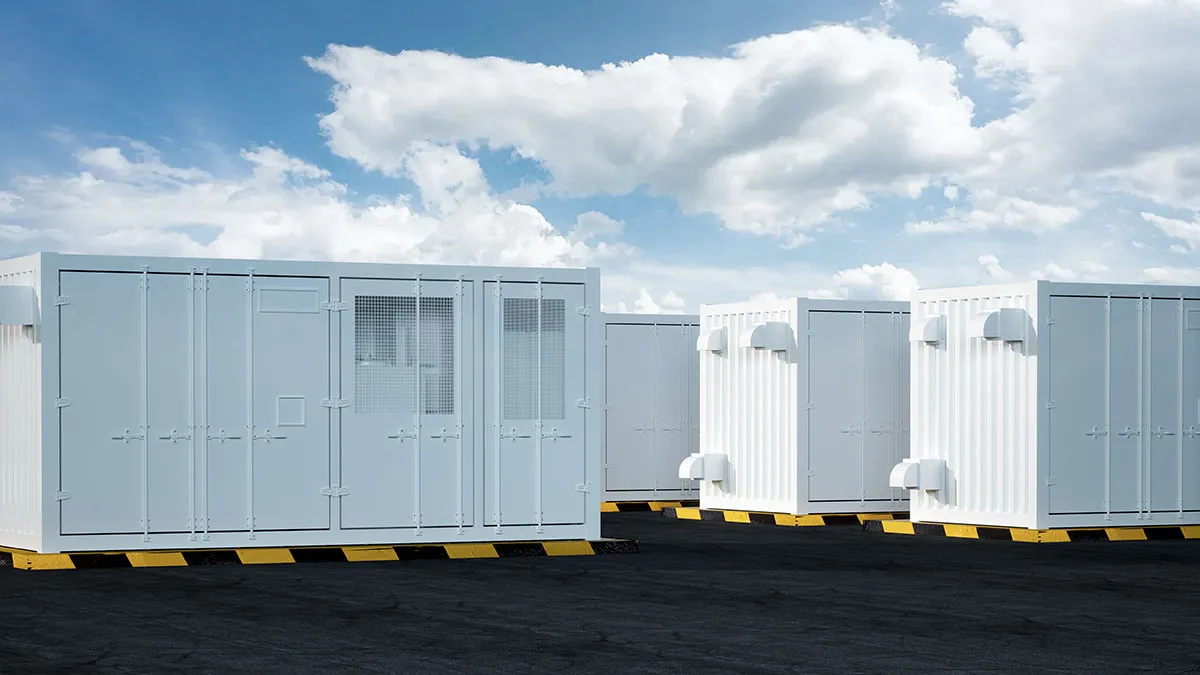
Solar battery failures often occur due to factors like overcharging, deep discharging, temperature fluctuations, poor wiring connections, or internal cell imbalances. These issues can lead to reduced energy efficiency, shorter battery lifespan, and even safety risks if left unchecked. Understanding these common causes helps homeowners and businesses maintain stable and efficient solar energy systems.
To prevent such problems, proper maintenance and smart management are key. Installing a reliable Battery Management System (BMS), keeping the battery in a stable temperature environment, and checking for corrosion or loose terminals regularly can greatly improve performance. By following these best practices, you can extend your solar battery’s lifespan and ensure consistent energy storage reliability.
As solar energy systems become more popular, solar batteries play an increasingly vital role in energy storage and management. However, improper installation, poor maintenance, or environmental factors can lead to various failures. Understanding these common issues, and how to prevent them, helps ensure that your solar battery system remains efficient, safe, and long-lasting.
1. Overcharging and Deep Discharging Issues
One of the most common causes of solar battery failure is improper charge management. Overcharging accelerates electrolyte evaporation and causes internal heating, while deep discharging (completely draining the battery) shortens its cycle life by degrading the active material.
- Install a Battery Management System (BMS) to control charge/discharge levels automatically.
- Regularly check voltage settings to ensure they match the manufacturer’s specifications.
- Avoid completely depleting the battery, try to keep the depth of discharge (DoD) under 80% for most lithium batteries.
2. Temperature Fluctuations and Thermal Stress
Temperature extremes significantly affect solar battery performance and lifespan.
High temperatures speed up chemical reactions, causing the electrolyte to dry out or the internal pressure to increase, while low temperatures reduce battery capacity and charging efficiency.
How to prevent it:
- Keep the battery in a temperature-controlled environment (ideally 15°C–30°C).
- Use batteries designed with thermal management systems or built-in temperature sensors.
- Avoid direct sunlight and extreme weather exposure for outdoor installations.
3. Poor Connection and Corrosion
Loose or corroded terminals can interrupt current flow, cause voltage drops, and lead to inefficient charging or even fire hazards. Corrosion often occurs due to exposure to humidity or improper maintenance.
How to prevent it:
- Inspect battery terminals and cables regularly for oxidation or rust.
- Use anti-corrosion grease or terminal protectors.
- Ensure all electrical connections are properly tightened and insulated.
4. Internal Cell Imbalance
Over time, individual cells within a solar battery can become unbalanced, some hold more charge than others. This imbalance reduces the overall efficiency and shortens the system’s usable capacity.
How to prevent it:
- Use a BMS with active cell balancing to keep cells at uniform voltage levels.
- Periodically perform equalization charging for certain battery types (like lead-acid).
- Choose reputable brands with strong cell quality control and balancing systems.
Common solar battery failures, such as overcharging, temperature stress, corrosion, and cell imbalance, are preventable with proper system design and maintenance. By investing in a high-quality battery management system, ensuring proper installation, and maintaining optimal temperature and connection conditions, you can extend your solar battery lifespan by years and maximize your energy independence.
Even the best solar batteries can develop issues over time if not properly maintained. Understanding common failures helps you prevent costly replacements.
Overcharging shortens battery lifespan and can cause overheating. A properly functioning BMS prevents this by regulating voltage and current. Discharging your battery below its safe limit can damage internal cells. Lithium batteries, especially LiFePO₄, have built-in protections, but consistent deep cycling reduces efficiency.
Both heat and cold can degrade performance. Install batteries in shaded or temperature-controlled areas. Improper cabling leads to power loss or even short circuits. Always have a qualified installer check your system annually.
Modern systems rely on smart software integration. Incompatibility between battery and inverter firmware can cause malfunction. The preventive actions are regular maintenance, monitoring apps, and professional inspections every 6–12 months.
How Long Do Solar Batteries Last and When Should You Replace Them?

The average solar battery lifespan depends on its chemistry, usage cycles, and maintenance. Recycling programs now exist for end-of-life solar batteries to recover lithium, nickel, and cobalt safely.
| Battery Type | Average Lifespan | Cycle Life (80% DoD) |
| LiFePO₄ | 10–15 years | 6,000–8,000 cycles |
| Lithium-ion (NMC) | 8–12 years | 4,000–6,000 cycles |
| Lead-acid | 3–5 years | 1,000–2,000 cycles |
How Much Does a Solar Battery Cost in 2025?
Prices continue to drop as manufacturing scales. In 2025, the average installed cost of a solar battery is
| Battery Type | Cost per kWh (Installed) | Total Cost (10kWh System) |
| LiFePO₄ | $450–$700 | $4,500–$7,000 |
| Lithium-ion (NMC) | $500–$800 | $5,000–$8,000 |
| Lead-acid | $200–$400 | $2,000–$4,000 |
The other cost factors are Installation labor, battery management and monitoring systems, Inverter compatibility and government rebates or solar incentives. Please keep in mind that always compare usable capacity, not total rated capacity, when evaluating cost-effectiveness.
How Much Energy Can a Solar Battery Store and Power?
Solar batteries are measured in kilowatt-hours (kWh) which is a unit of energy.
A 10kWh battery can power
- 1 refrigerator (1.5kWh/day)
- 10 LED lights (1kWh/day)
- 1 air conditioner (3kWh/day)
- Miscellaneous appliances (2kWh/day)
That’s enough to run an average home overnight or provide backup for 10–12 hours.
Battery Size (kWh) = Daily Usage × Days of Autonomy × 1.1 (safety factor)
What’s the Best Solar Battery Type for Home Energy Storage
Each battery chemistry offers distinct advantages:
| Battery Type | Pros | Cons |
| LiFePO₄ | Long life, high safety, deep cycling | Higher upfront cost |
| NMC Lithium-ion | Compact, high energy density | Can heat up faster |
| Lead-acid (AGM/Gel) | Affordable, simple tech | Short lifespan, low DoD |
In 2025, LiFePO₄ is considered the gold standard for home energy storage due to its 10,000+ cycle potential, stable chemistry, and low maintenance.
How to Optimize Solar Battery Efficiency
To get the most from your investment, please keep these tips in mind
- Use Smart Energy Management Apps: Track usage in real-time.
- Avoid Full Discharges: Keep DoD between 80–90%.
- Clean and Inspect Regularly: Dust buildup affects ventilation.
- Upgrade Inverter Firmware: Improves communication and efficiency.
- Seasonal Adjustments: Recalibrate solar input during summer/winter.
- Efficiency (%) = (Energy Discharged / Energy Charged) × 100
Environmental Impact and Recycling of Solar Batterie
While solar batteries reduce carbon emissions, their raw materials and disposal must be managed responsibly.
- Positive Impact: Offsets fossil fuel dependence and reduces grid strain.
- Challenges: Mining lithium and cobalt has environmental costs.
- Second-life battery applications (e.g., EV batteries reused for home storage)
- Recycling programs by companies like Redwood Materials and Li-Cycle.
- Choose manufacturers with transparent recycling commitments and certifications like ISO90001, ISO14001.
Solar Battery Maintenance Tips for Homeowners
Routine maintenance ensures long-term reliability.
- Check your system via mobile app weekly.
- Keep batteries in a clean, dry, well-ventilated location.
- Avoid direct sun exposure.
- Inspect cables and terminals for corrosion.
- Perform professional inspections annually.
- If not in use for long periods, maintain a 40–60% charge.
Future Trends in Solar Battery Storage
By 2030, the solar battery landscape will look very different.
- Solid-State Batteries: Higher energy density, faster charging.
- Sodium-Ion Batteries: Lower cost, safer chemistry for grid-scale use.
- Vehicle-to-Home (V2H): Electric vehicles acting as home batteries.
- AI Energy Management: Predicts energy usage and weather to optimize charging.
Global capacity is expected to double every three years, driven by falling costs and government incentives.
Solar battery energy storage is no longer just a trend, it’s a cornerstone of sustainable living. Whether you’re aiming for lower electricity bills, backup power during outages, or complete energy independence, a properly designed solar battery system can make it possible.
When choosing a battery, focus on chemistry (LiFePO₄ preferred), cycle life, warranty, and compatibility with your inverter. Investing in quality solar storage today ensures energy security, environmental responsibility, and long-term savings for the next decade.
If you would like to know more about solar battery basics, please refer to the page Solar Battery Basics Episode 1: Introduction to Solar Batteries.